Today in Brattleboro History Feature
I enjoy reading the ‘Today in Brattleboro History’ feature. I especially enjoy seeing articles that indicate that the same ol’ same ol’ is going on in our town.
For example, from today’s:
1874 Fisk Finger Filched

History section
I enjoy reading the ‘Today in Brattleboro History’ feature. I especially enjoy seeing articles that indicate that the same ol’ same ol’ is going on in our town.
For example, from today’s:
1874 Fisk Finger Filched
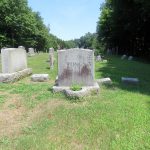
The Wong family plot is easy to find in Brattleboro’s Locust Ridge Cemetery on Black Mountain Road next to I-91. It’s the only gravestone facing south, consistent with Feng Shui. Lily, Stephen, and Emerson died 60 years ago on July 19, 1958, ages 29, 5, and 2. Two members of the family survived the terrible collision near the dangerous old Route 1 bridge in Belfast, Maine. Their spots are reserved and their birth dates already engraved. Arthur had just finished first grade at the Green Street School and was still in a coma when the stone was erected. The father, P. Lawrence Wong (also known as Paul or Laurence), was likely the only family member at the burial.
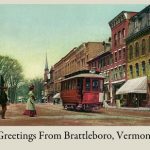
I thought it might be fun to tell you about a project (in-progress!) I’m working on with the Brattleboro Historical Society. It’s an exhibit all about Brattleboro that will be on display at the Vermont Historical Society in Montpelier, from August to January.
BHS hired me on to do exhibit design and project manage, two things I enjoy doing. I also love Brattleboro history.
This essay is part of an ongoing dialogue with my nephew. It is a response to his contention that the Fair Housing Act of 1968 outlaw freedom of association, because it force diversity on people. I had mentioned the history of lynching. Challenging the connection between lynching and the freedom of association argument, he responded: “The number of lynchings fell to essentially 0 well before LBJ was elected: http://xroads.virginia.edu/~MA03/faturoti/harlem/collage/lynchstats.html”
Dear Russell,
Lynchings were often not simply hangings:
Although on some level I must have known this already, somehow I was surprised to learn (in a book on Celtic history called The Ancient Paths by Graham Robb) that the ancestors of most white Americans were the same people we remember in history as “the barbarian hordes.”
Back in the ‘60s, I attended a conference of Electrical Utilities.
The conference was held in Lake George, NY, and the two keynote speakers were Nelson Rockefeller, then Governor of New York, and the newly elected Governor of Vermont, Phil Hoff.
Rockefeller was the first to arrive, and, arrive he did, with a huge entourage.
I noticed the history note about John Birge’s woolen mill burning down. There is an old woolen mill still standing on Birge Street. It is now apartments. I wonder if this is on the site of the one that burned? I’ve read that they made blankets there for the Union Army and later for Jordan Marsh.
Puzzle Pieces Of Black American History
A bit of Martin Luther King Jr, on MLK Day:
On Monday, December 11, at 6:30 PM, genealogist Jerry Carbone will discuss the genealogical treasures of the online content of Americanancestors.org, in his talk, “Navigating the Online Portal for New England Genealogical Research, AmericanAncestors.org,” in the Brooks Memorial Library meeting room, beginning at 6:30 PM.
From Today’s History, November 20, 1891:
Plans for a new Brattleboro-Hinsdale Bridge are in the works. Here’s some history on the subject…
For centuries, Brattleboro has enjoyed a love affair with books.
In this episode we tell the history of Brattleboro from day 1, discuss the historiography of Brattleboro from its inception to today, and introduce a few future historians… All 4 minutes.
In 1957 the Celtic legends Bill Russell, Bob Cousy and Sam Jones played in the Brattleboro High School gym. Art Freeman remembers them well, but also remembers unsung hero, power forward Jim Loscutoff. Here’s the story…
The scene is the Civil Rights Museum, Memphis, Tennessee. For those unaware, in addition to its nickname as the birthplace of rock and roll, and being the largest city on the Mississippi River, Memphis is named after another Delta city, the ancient capital of lower Egypt, a mighty dynasty long since vanished into oblivion. Most notably, Memphis is where Martin Luther King was shot. That exact spot being the setting for this encounter.
The Guilford Street Ski Tow began in 1938. It was one of the 1st three ski tows in New England and led the way as nearly 700 community and neighborhood ski areas sprang to life in Vermont alone. In the intervening years 620 of those once-thriving community ski hills have closed, but the Guilford Street Ski Tow remains.
The upcoming Vermont Humanities Council’s First Wednesday lecture will discuss how George Washington handled his interactions with Indian peoples. Join us on Wednesday, May 3 at 7 pm at Brooks Memorial Library. Dartmouth College professor Colin Calloway will look at the first president’s relations with Indian peoples and consider how Native American nations and lands shaped the man who shaped the republic. His talk, “The Indian World of George Washington,” is part of the Vermont Humanities Council’s First Wednesdays lecture series and is free and open to the public.
In 1840 Dr. Robert Wesselhoeft moved to Boston from Germany. He was publicly humiliated by Dr. Oliver Wendell Holmes and driven from town. Wesselhoeft moved his family to Brattleboro and opened a “Water Cure”…here’s the story…